What happens when you combine wind-up toys, stopwatches, meter sticks and a little friendly competition? In Adelle Nofzinger’s Physical Science class, you get a hands-on lesson in speed, distance and time!
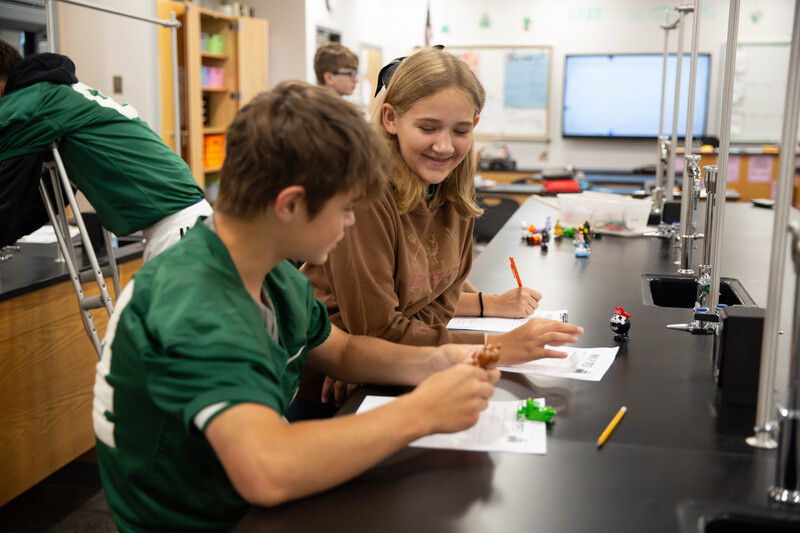
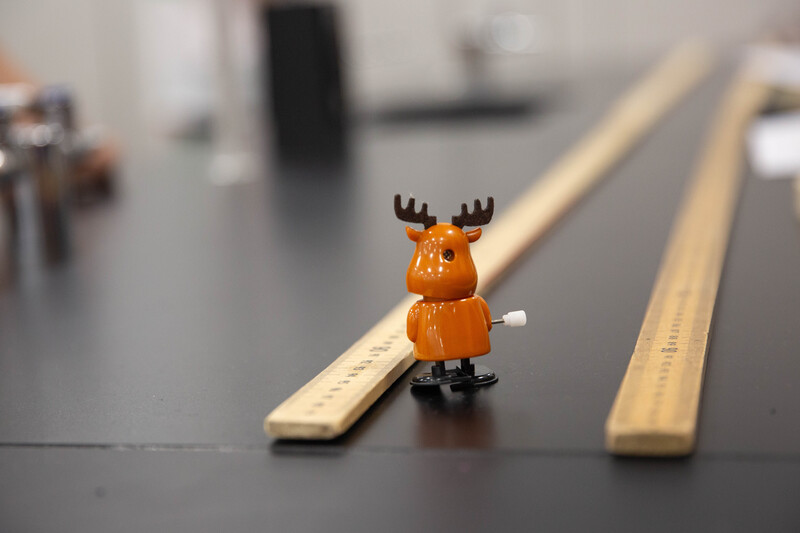
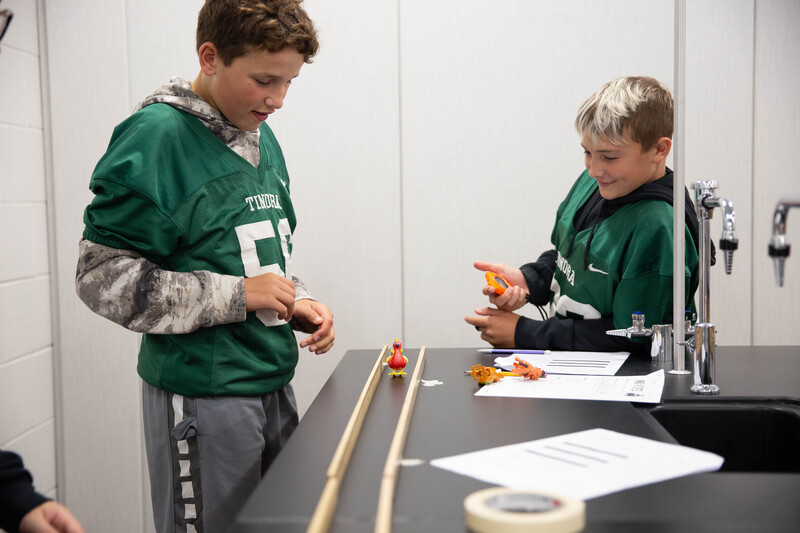
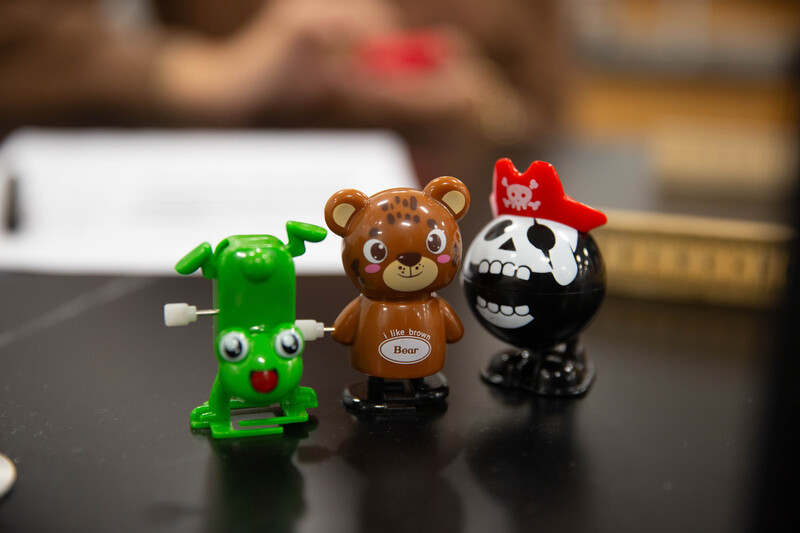
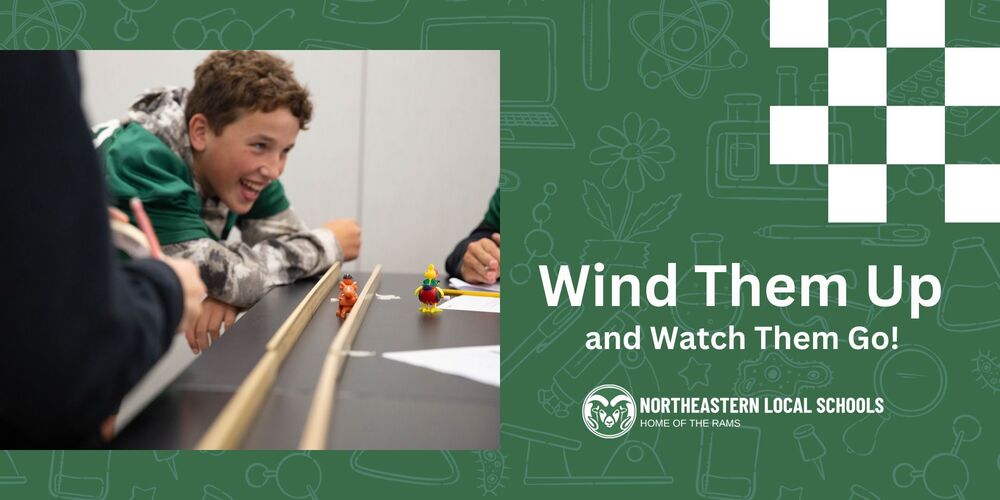
Students recently took part in the Wind Up Speed Lab, where they put three different wind-up toys to the test to determine which one had the fastest average speed.
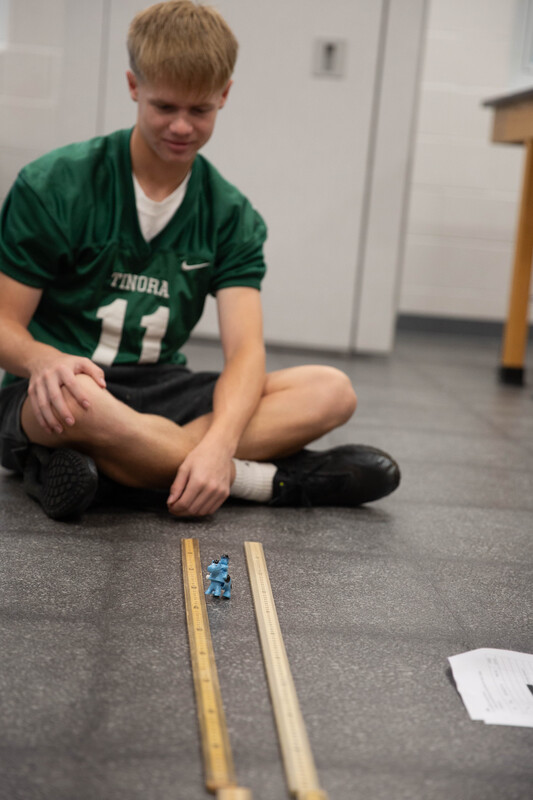
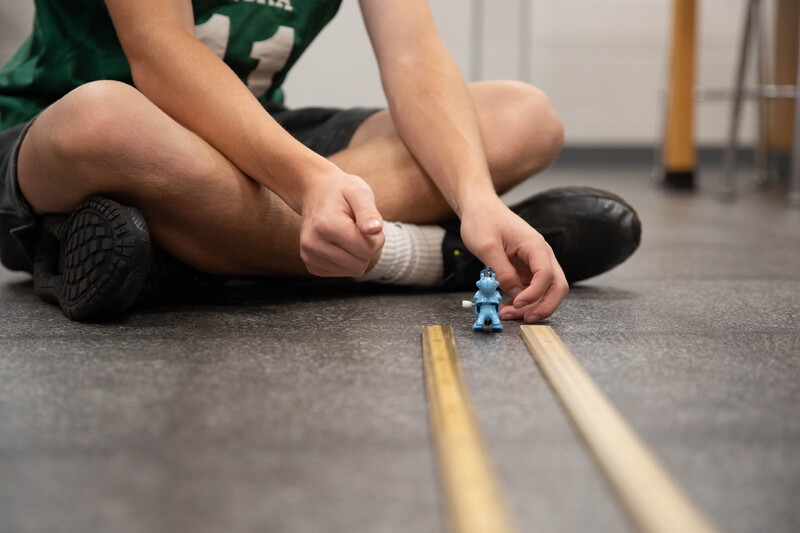
Before the racing began, students made a hypothesis about which toy they thought would be the fastest. They then created tracks on tables and the floor using masking tape and put their predictions to the test.
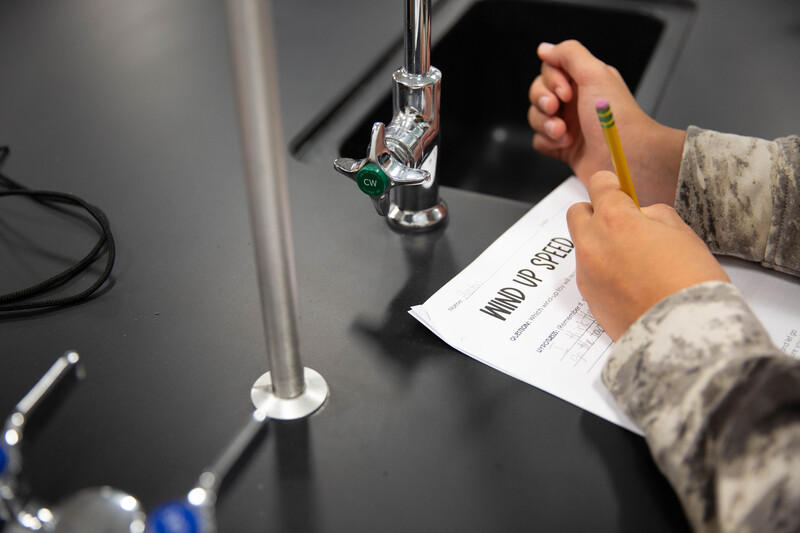
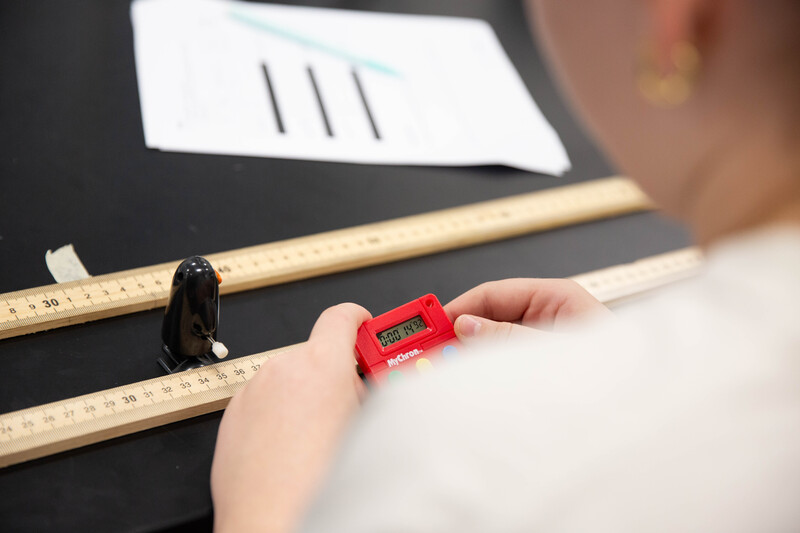
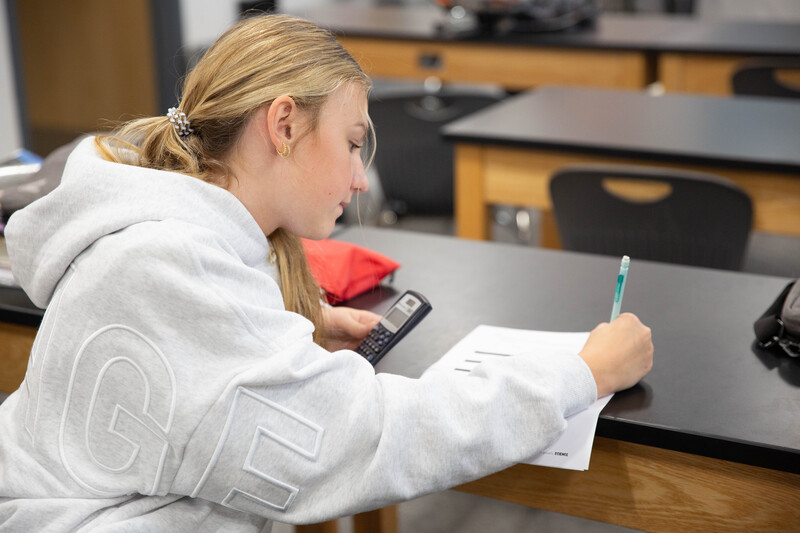
Working with each wind-up toy, students measured how far it traveled and used a stopwatch to record the amount of time it took. They recorded their results, calculated each toy’s speed using speed = distance ÷ time and ultimately graphed the average speed of all three toys.
“The Wind-Up Speed Lab was designed to help students develop a deeper understanding of motion, specifically distance, time, and speed,” Nofzinger explained. “Rather than simply memorizing the formula for speed, students were able to see how distance and time work together to describe how quickly an object moves.”
And as students quickly discovered, conducting an experiment doesn’t always go exactly as planned. Wind-up toys don’t necessarily travel in perfectly straight lines or move at exactly the same speed each time. Those inconsistencies became part of the learning experience as students considered variables that could impact their results and thought about why their data might differ.
The activity connects to both Ohio’s eighth-grade science standards and the high-school Physical Science content covered in the advanced course. It also gave students practice with skills they will continue to use throughout the course, including measurement, problem-solving, critical thinking and data analysis.
For Nofzinger, that opportunity to make connections is one of the best parts of bringing hands-on activities into the classroom.
“Students are able to ask questions, collect evidence, analyze their results, and explain their thinking rather than simply plugging numbers into a formula,” she said.
Student Zach Knight summed up the experience much more simply.
“I think it’s fun. I get to do projects to learn,” Knight said.
Sometimes, a wind-up toy is all it takes to put science in motion.