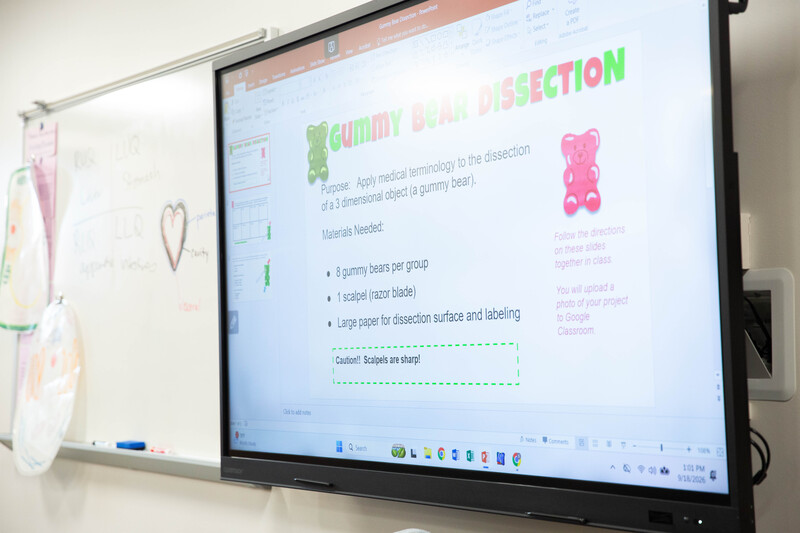
Before Tinora Anatomy students take on sheep brains, cow eyes and other specimens this year, Biology and Anatomy teacher Sarah Sehlmeyer is making sure they know their way around the dissection table.
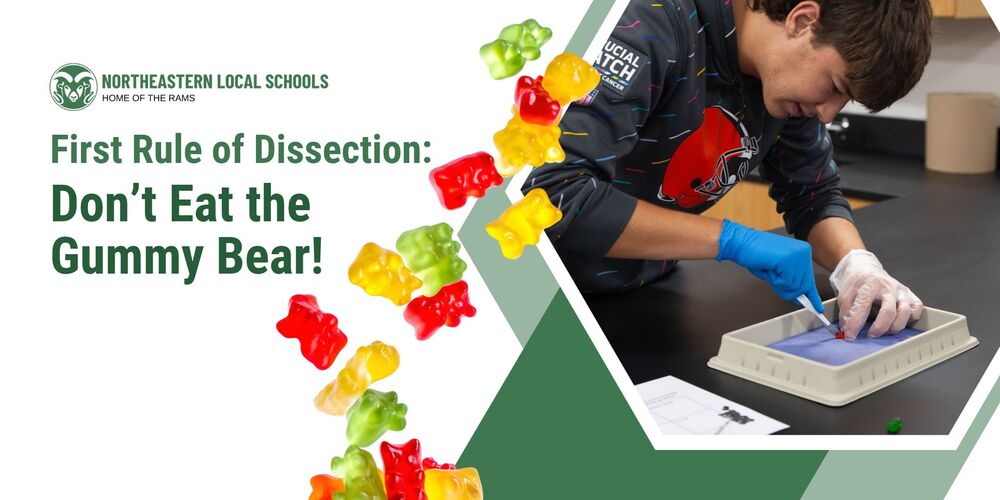
Their first specimen? A gummy bear!
The activity offered students a fun and much less intimidating way to practice proper dissection techniques while putting their newly learned anatomy vocabulary into action.
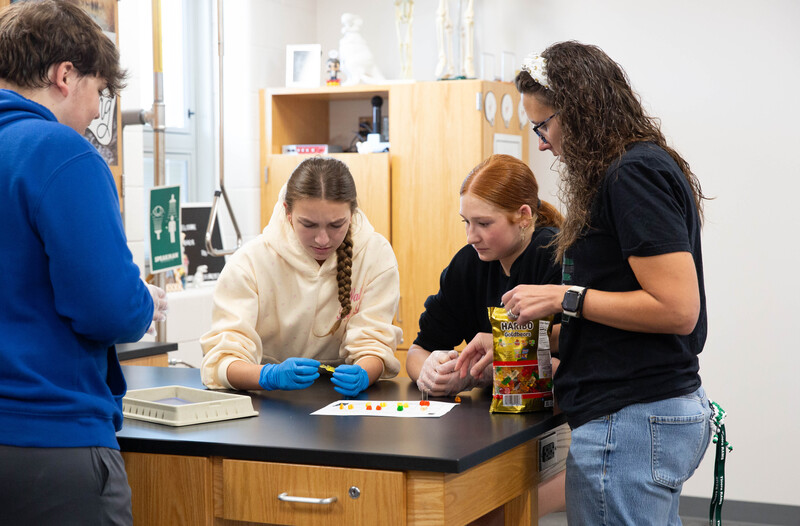
In the days leading up to the lab, students learned and practiced anatomical directions and reviewed important safety procedures, including how to properly gather, use and clean up dissection materials.
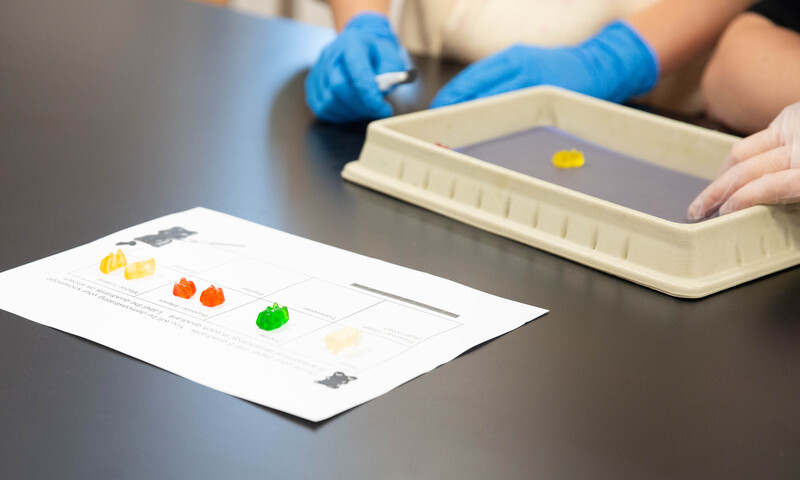
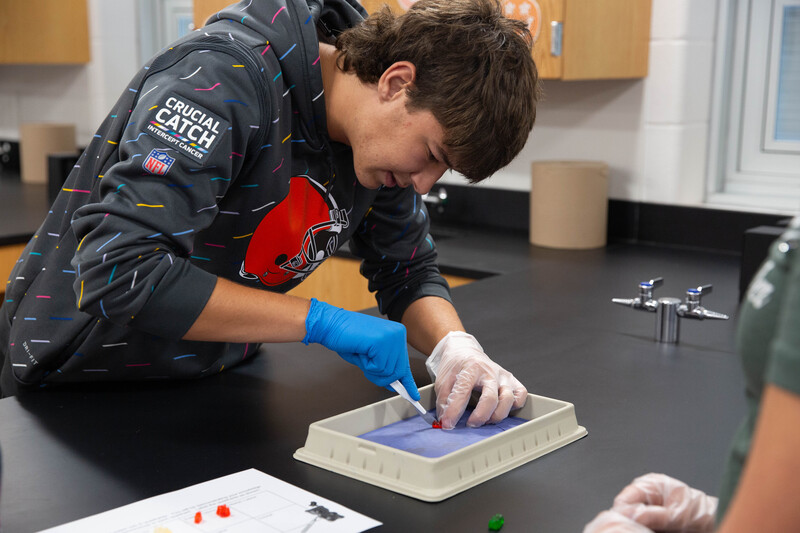
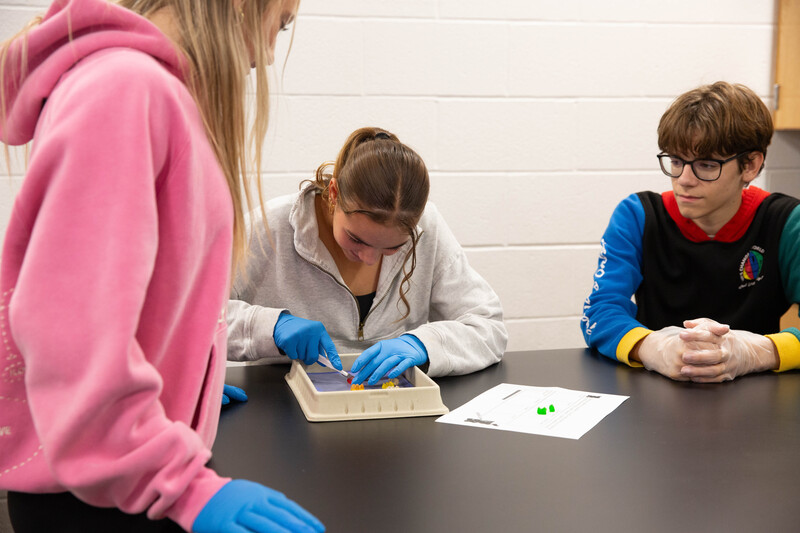
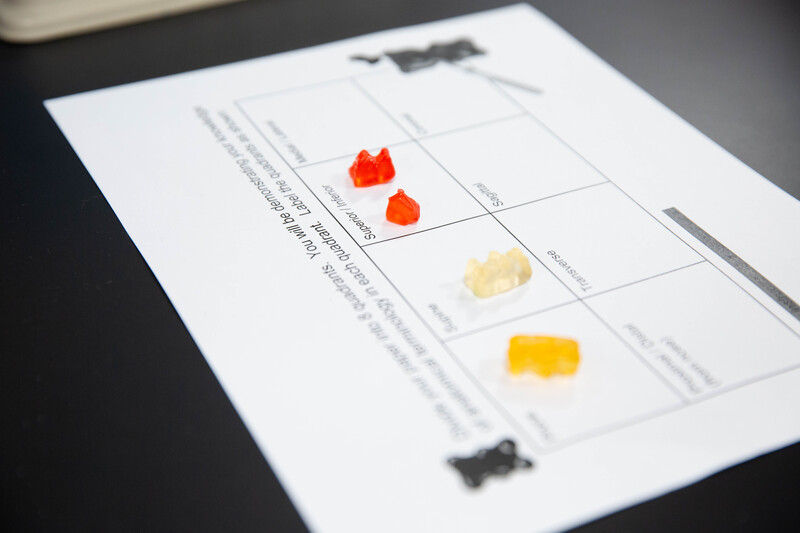
On lab day, each student received a gummy bear and was given eight anatomical directions or planes to demonstrate through their “dissection.”
“They did fantastic!” Sehlmeyer said. “We had a little extra time before cleaning up, so I challenged them to do other anatomical directions, which they did, and also showed different body cavities.”
The activity reinforced concepts students had recently studied during their introduction to Anatomy, including directional terms such as medial and lateral, proximal and distal, and anterior and posterior. Students also practiced identifying the frontal, sagittal and transverse planes of the body.
“Anatomy has its own directional language due to the unique movements of the body,” Sehlmeyer explained.
Rather than simply memorizing that vocabulary, students had to make it visual. Cutting their gummy bears required them to determine exactly where a particular plane or direction would be located and then demonstrate their understanding.
“Students had an opportunity to use their creativity to show different terms, and I hope they continue to think about different ways to help them learn material,” Sehlmeyer said.
Building Confidence Before the Real Thing
The gummy bears served another important purpose: giving students an opportunity to become comfortable with the procedures and equipment they will use during future dissections.
“Knowing the equipment and the environment before getting out an actual specimen helps students focus on the dissection,” Sehlmeyer said. “Instead of wondering what to do when a glove rips or a tool breaks, they will already know what to do without the added stress of a sheep brain on the dissection tray.”
Students have previous dissection experience from Biology, so the activity also provided an opportunity to recall and reinforce those skills. While every specimen may be different, many of the tools, safety expectations and laboratory procedures remain the same.
Later this year, Anatomy students will put those skills to work while dissecting sheep brains, cow eyes and a larger specimen at the end of the year. Sehlmeyer also hopes to expand the number of dissections offered in the future to give students opportunities to explore additional body systems.
“This gummy bear lab gives students the opportunity to practice working in the lab setting without the pressure of it being a real specimen,” she said. “Students will also be able to use the proper terminology to describe the specimen. Practice! Practice! Practice!”
Of course, there was one particularly important lab rule students had to learn during their first dissection: Do not eat your specimen!
Students were understandably a little confused when they learned the gummy bears on their trays were strictly for dissecting.
After some convincing, Sehlmeyer reached a compromise. Students agreed not to eat their specimens, and she promised them separate gummy bears that would stay far away from the dissection materials.
It was a lighthearted way to introduce skills students will use throughout the year while giving them the opportunity to learn by doing.
For Sehlmeyer, who is beginning her journey teaching at Tinora, it is just the start of what she hopes will be an exciting year in the classroom.
“I am excited to be here!” Sehlmeyer said. “I can’t wait to see what this year holds!”